INVISALIGN $1000 OFF Summer Special. Learn More


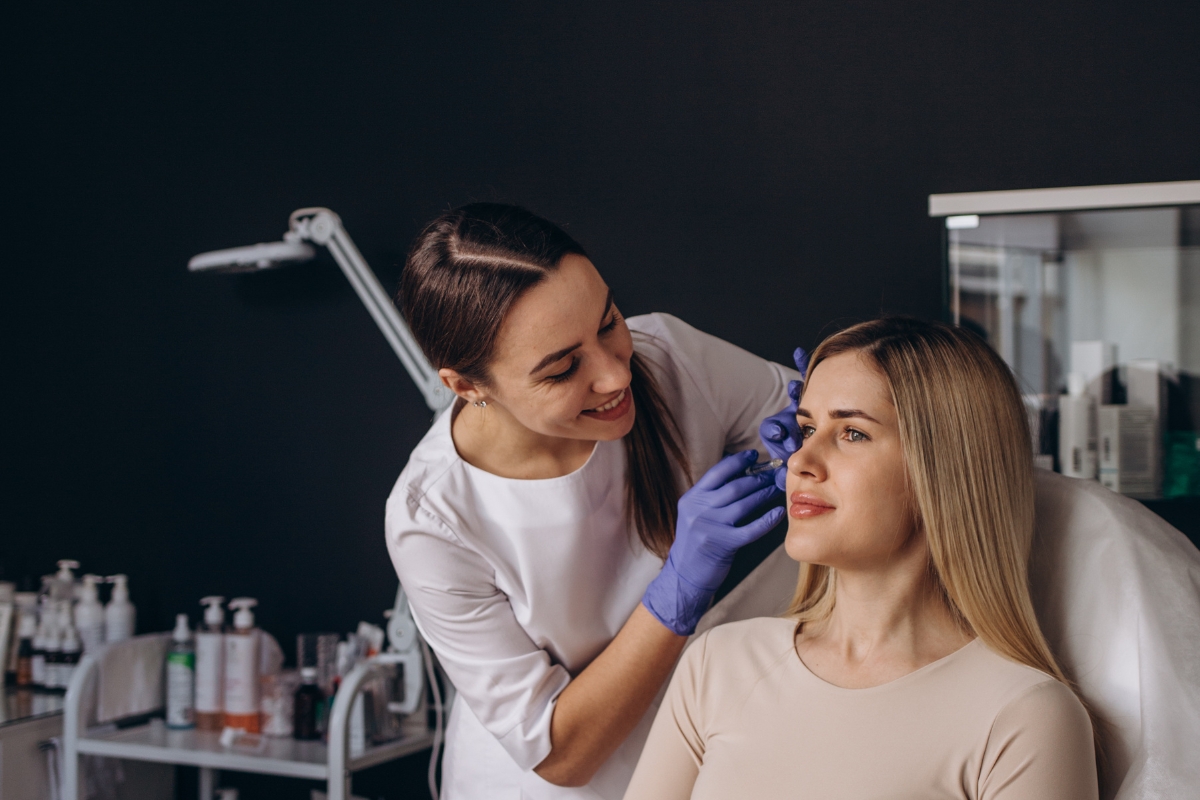
Botox has become one of the most widely recognized cosmetic treatments in the country, and for good reason — it works, it’s fast, and when administered correctly, the results look natural. But not all Botox treatments are the same, and the setting where you receive them matters more than most people realize.
A dental office offering Botox and a spa offering Botox may both be using an FDA-approved botulinum toxin product, but the training behind the needle, the clinical assessment that precedes it, and the conditions being treated are meaningfully different. Understanding that difference helps you make a smarter decision about where your care belongs.
Same Product, Very Different Purposes
Botulinum toxin type A — sold under brand names like Botox, Dysport, and Xeomin — works by temporarily blocking the nerve signals that cause muscle contractions. In a spa setting, injections are almost exclusively cosmetic: smoothing forehead lines, softening crow’s feet, or reducing the appearance of frown lines between the brows. The goal is aesthetic, and the results are evaluated visually.
Dental Botox, by contrast, uses the same mechanism for a much broader set of applications — many of which are therapeutic rather than cosmetic. Botox therapy in Cincinnati at a dental practice is used to address conditions like TMJ disorder, bruxism (teeth grinding), chronic jaw tension, and even migraines that originate from muscular dysfunction around the jaw and face. The dentist’s deep familiarity with facial anatomy, occlusion, and jaw mechanics makes them uniquely positioned to use Botox in this way.
Why the Injector’s Background Changes Everything
What Dentists Know That Spa Providers Often Don’t
Dentists spend years studying orofacial anatomy — the muscles, nerves, joints, and tissue structures of the face and jaw in more detail than almost any other healthcare provider outside of oral and maxillofacial surgery. This isn’t a minor distinction. The muscles involved in chewing, jaw movement, and facial expression are interconnected in complex ways, and injecting into them without that depth of knowledge carries real risks.
When a dentist evaluates a patient for Botox, the assessment goes beyond the visible lines on the surface. They’re considering how the jaw functions, whether there’s tension in the masseter muscle (the large jaw muscle that contributes to TMJ pain and a squared jawline), how the teeth meet, and whether underlying dental issues are driving the symptoms the patient wants to address. A spa esthetician, even a well-trained one, does not have access to that clinical picture.
The Risk of Treating Symptoms Without Diagnosing the Cause
This is where the gap between dental Botox and spa Botox becomes clinically significant. Someone experiencing chronic jaw soreness, headaches at the temples, or facial pain might seek Botox at a spa to relax the muscles causing discomfort. That might provide temporary relief. But if the underlying cause is a misaligned bite, worn teeth, or a structural jaw problem, the soreness will return, and the actual issue will go unaddressed.
A dentist evaluating that same patient would assess the whole picture — the bite, the joint, the muscle patterns — before recommending Botox as part of a broader treatment approach. That’s the difference between symptom management and actual care.
What Dental Botox Is Commonly Used For
The therapeutic applications of Botox in a dental setting are worth understanding on their own terms. This isn’t cosmetic treatment repurposed for dentistry — it’s a well-established clinical tool for conditions that dentists are specifically trained to treat:
- TMJ disorder and jaw joint pain, where Botox relaxes the overactive muscles contributing to clicking, locking, or chronic aching in the joint
- Bruxism (teeth grinding and clenching), where injections into the masseter reduce the force generated during grinding, protecting teeth and alleviating associated headaches
- Myofascial pain — tension and trigger points in the facial and jaw muscles that contribute to facial pain and headaches
- High lip line correction for patients who show excess gum tissue when smiling, which Botox can reduce by slightly limiting upper lip elevation
- Post-orthodontic lip and muscle adjustment to help patients adapt to changes in their bite and dental alignment
These are functional outcomes, not just cosmetic ones. And because they involve the same anatomy dentists work with every day, the dental office is often the most logical place to receive this care.
Cosmetic Botox at a Dental Office: Still a Valid Option
It’s worth clarifying that dental offices offering Botox don’t exclusively treat therapeutic conditions. Many patients come in for cosmetic Botox — the kind that reduces forehead lines or softens the area around the eyes — and receive excellent results because the anatomical training behind the treatment is rigorous.
The advantage of receiving cosmetic Botox at a dental office is that the provider can assess your full facial structure and how your dental health interacts with your appearance goals. Patients who grind their teeth, for example, often develop a more pronounced masseter muscle that changes the shape of the lower face. Addressing that with Botox can have both cosmetic and functional benefits that a spa provider wouldn’t identify.
Find Out Which Botox Option Is Right for You
Whether your concern is functional jaw pain, cosmetic refinement, or both, the right starting point is a conversation with a provider who understands the full picture. MK Dental Excellence is accepting new patients for Botox therapy consultations. Request an appointment online or call the office to schedule.
People Also Ask
Q1: Is dental Botox covered by dental insurance?
Therapeutic Botox for conditions like TMJ disorder or bruxism may be partially covered by dental or medical insurance, depending on your plan and how the treatment is documented. Cosmetic Botox is generally not covered. Your dental office can provide the coding and documentation needed to submit a claim for therapeutic applications.
Q2: How long does dental Botox last compared to spa Botox?
Both use the same botulinum toxin product, so the duration is similar (three to four months). Some patients treating functional conditions like bruxism report that results last slightly longer over time as the treatment reduces habitual muscle overuse. Your provider will recommend a maintenance schedule based on your response.
Q3: Does Botox for jaw clenching change the shape of my face?
It can, in a subtle and often desirable way. Repeated Botox injections to the masseter gradually reduce the size of that muscle through reduced use, which can slim the appearance of the lower jaw. This effect develops over several treatment cycles and is typically considered a cosmetic bonus for patients receiving it primarily for functional reasons.
Q4: Can Botox replace a night guard for bruxism?
Not entirely, but they work well together. Botox reduces the force of clenching by relaxing the masseter muscle, which decreases wear on teeth. A night guard directly protects the tooth surfaces. Many patients with significant bruxism benefit from using both approaches together as part of a comprehensive treatment plan.
Q5: How do I know if my jaw pain is muscular or structural?
A dental evaluation can determine this. Muscular jaw pain — often from clenching or tension — may respond well to Botox. Structural issues involving the temporomandibular joint itself may require imaging and a different treatment approach. A dentist can assess both and determine the most appropriate path forward.